Slowing down the feeding tube conversation
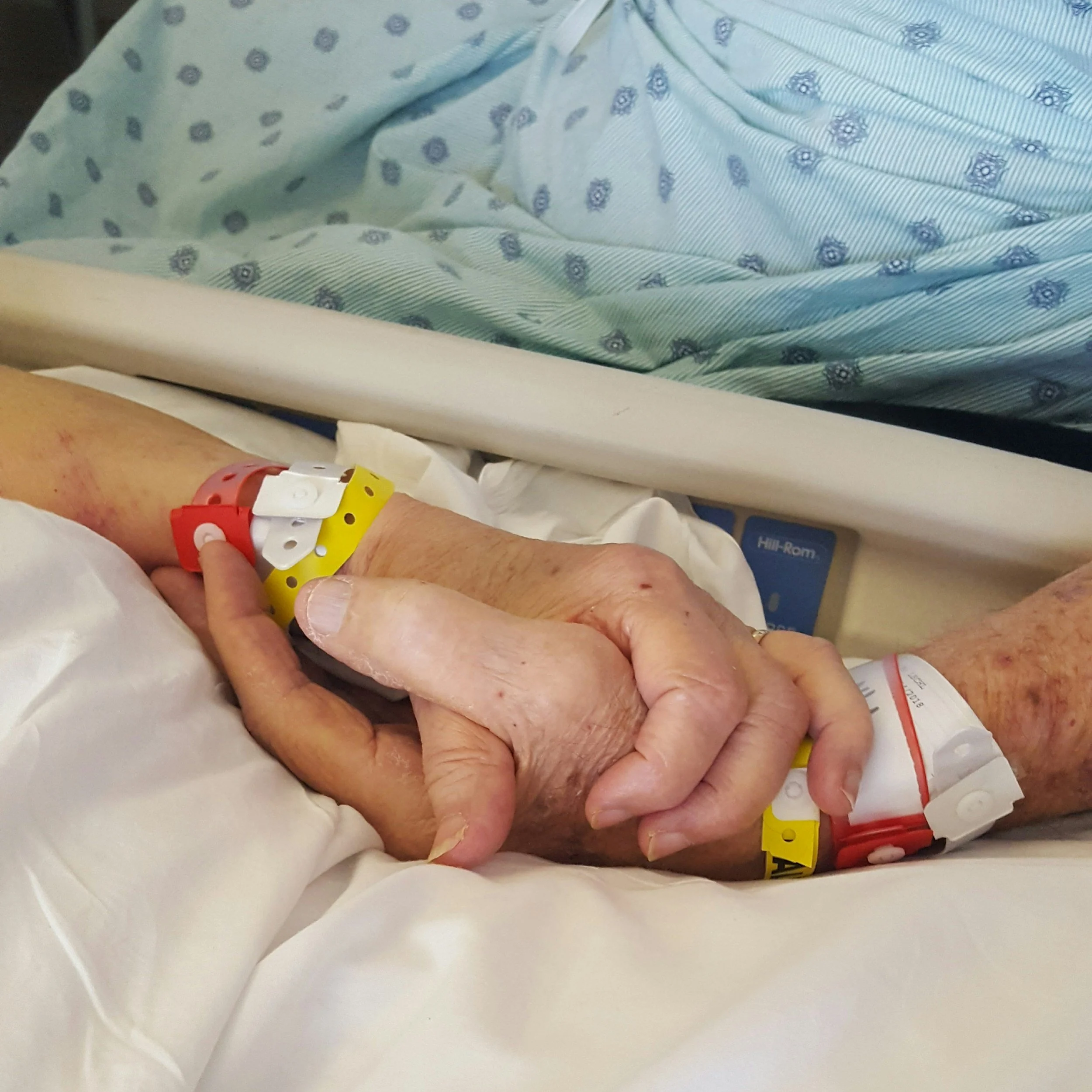
The hospital room was quiet and filled with anxiety. It was just after 6 PM, well past the SLP’s typical shift, and the fluorescent lights cast a stark, unforgiving glow on the most difficult decision of the day.
Imagine a patient, Helen, 89 years old, admitted for the third time in six months. She had advanced Alzheimer’s disease, complicated by recent, silent aspiration on an instrumental study. The chart read: “NPO, PEG tube consult pending.” Her daughter, Anne, sat holding her hand, her shoulders tense with exhaustion and anxiety.
The SLP looked at Helen. She was frail, but she had good eye contact and followed the movement of the room. When offered an ice chip, the SLP could see that her mouth was extremely dry; her mucosa was beginning to crack and open up. She opened her mouth to take the ice chip and sighed with relief as it touched her tongue. It was the first thing she had been given in over 24 hours.
We know that the risk of PO intake is high here, but we also know that the risks of a feeding tube are high. Pushing a feeding tube at this stage—a surgical intervention that would likely not prolong her life or prevent aspiration pneumonia—should be considered an act of over-treatment, driven by the fear, defensive medicine, and not in line with the patient’s best interests.
The SLP paused. This wasn't a problem to be solved with a quick recommendation and plans to reassess later. This situation required time, attention, and shared decision-making. It was time to deploy the PARTNERS© framework, slowing down the chaos to give the patient and family a sense of control and a sense of humanity in their care.
How to have tough conversations:
First, let’s review the PARTNERS© framework, created by Marta Kazandjian MA CCC-SLP BCS-S, FASHA, which I’ve discussed in detail in another article, which you can find here.
The PARTNERS© framework is an inclusive tool designed for multidisciplinary teams to structure serious illness conversations and ensure a cohesive, person-centered plan of care.
Here is the acronym spelled out, letter by letter, as described by Kazandjian, 2022:
P stands for Prognosis.
This component focuses on what the patient or surrogate understands about their overall condition and its specific impact on communication and swallowing.
A stands for Advance directives.
This involves discussing legal tools that express the patient's healthcare wishes, such as DNR (Do Not Resuscitate) status and healthcare proxies.
R stands for Risk.
This component requires the patient or surrogate to understand the risks of a certain procedure or treatment (like a PEG tube) as well as the risks of not having that procedure. It involves balancing swallow safety and quality of life.
T stands for Talk.
This is about facilitating conversation, active listening, and empathy, with cultural sensitivity, to learn what matters most to the patient.
N stands for Nonoral feedings.
This addresses the consideration of short-term or long-term alternative means of nutrition, such as feeding tubes, when swallowing safety is a concern.
E stands for Expectations.
This involves identifying and managing the patient's and family's expectations, especially when those hopes might not align with the medical prognosis.
R stands for Recommendations.
The team shares its suggested course of action, guided by evidence and clinical practice guidelines, while respecting the patient's goals of care.
S stands for Summary and support.
This final step involves actively summarizing the conversation, checking for understanding, and ensuring ongoing support is in place, recognizing that these conversations are often ongoing.
Back to Helen…
The challenge with severe dysphagia is that every choice can feel like a high-stakes, life-or-death decision (and often they really are). Because of this, families need guidance to work through them. You wouldn’t want someone to navigate a hike up Mount Everest alone, would you? Similarly, patients and families need assistance from a skilled professional when deciding what to choose when there are no good options in front of them.
Our goal for Anne is to help her get past the immediate panic of the NPO order and help her access the Advance Directives (A) and Expectations (E) of her mother.
I started by addressing the hardest component first: Prognosis (P).
What might this sort of conversation look like:
SLP: "Anne, I want to help us make the best decision for your mother. I know there are probably a lot of difficult emotions coursing through you right now so let’s try to slow things down and take this step by step. First, can you tell me what the doctor has shared with you about your mom's overall condition and prognosis? Help me understand what you know right now."
Anne (Daughter): "They say she's stable now, but... they keep using words like 'failure to thrive.' And they said that her swallowing is really bad. They said the tube is the only safe option at this point. If that’s true, then I understand, but I want to make sure I’m weighing all options and not just making a knee-jerk reaction. The problem is that I haven’t had anyone sit with me and really go through all of the potential options."
SLP: "I hear you. It sounds like the team is worried about her swallowing safety, which makes sense given her current status. So, let’s address the Risk (R) directly here. The risk of eating is that aspiration, when food or liquid goes into the airway instead of the esophagus, can contribute to pneumonia and choking, which can lead to death. This is what the feeding tube placement is theoretically intended to address. But that’s only one side of the story. We can’t understand the whole picture if we don’t also address the risks involved with placing a feeding tube.
First of all, the risk of aspiration is not eliminated with NPO status and the use of a feeding tube. This is because…
#1 Aspiration cannot be eliminated, even with a feeding tube. We can’t stop someone from swallowing saliva, right? Most importantly, saliva is typically the cause of aspiration pneumonia, particularly when oral health is poor.
#2 There are risks associated with a tube, including risks during the surgery, infection, tears, obstructions, dislodgment, and discomfort. Oh, and feeding tubes can increase the risk of reflux, where liquid from the stomach enters the airway. So you’d have to be willing to accept those risks in order to receive the potential benefits of providing nutrition and hydration.
Now we let the conversation shift to Talk (T) it out and see if we can better understand Helen’s past wishes.
SLP: "You are holding a huge responsibility right now”. Marta Kazandjian often uses this technique to assist with difficult conversations; “If we could pull a chair up for your mom, and she could tell us exactly what she wanted in a situation like this, what would she say about a PEG tube? Did she ever tell you what her wishes were for her care?"
Anne (Daughter): (Tears up) "She was always so clear. She said she never wanted to be hooked up to tubes or machines. She always said, 'When it's my time, just let me enjoy whatever I have left. Let me be. I’m terrified of starving her, but I know she wouldn't want a feeding tube. I just want her to see her enjoy her coffee again or her ice cream again."
SLP: "I hear you, Anne. Given what she's told you, it appears she would not be interested in staying NPO and with a feeding tube. It’s wonderful that you’ve had this conversation with her before, so you know what she would have wanted. Let's focus on her wishes and give her the best opportunity to live a life she would have wanted at this stage.”
A Dialogue with The Interdisciplinary Team
The next morning, the team meeting was tense. The surgical team wanted the PEG tube placed by noon and they’re curious (and maybe a little furious) as to why the procedure was cancelled.. They had seen concerns about aspiration and deemed oral feeding too risky. What else was there to do? Why are we changing course so late in the game?
The SLP has a role in helping the team see the nuance of each individual situation and avoid generalities based on hard rules and a “this then that” mentality.
Dr. Hayes (Attending Physician): "We appreciate your due diligence, but the instrumental study confirms silent aspiration. The PEG tube is the consensus recommendation to stabilize her nutrition and prevent pneumonia. Why are we delaying?"
SLP: "Dr. Hayes, I agree Helen has a severe swallowing impairment, but I want to talk about all of our options before we assume that a feeding tube is in fact the best option for her.
Let’s again use the PARTNERS© framework, now to align with the team…
Prognosis (P) & Risk (R): Your team gave her a poor outlook due to advanced dementia. I think we should acknowledge that placing a PEG tube does not prevent aspiration pneumonia and can actually introduce new risks like reflux and infection. The evidence shows that placing tubes in advanced dementia is often not the best approach, as detailed in the American Geriatrics Society's feeding tubes in advanced dementia position statement. Do you agree?
Ms. Davis (Case Manager): "But the family is exhausted, George. They just want a solution to stop the decline and the worry about malnutrition. We have that solution for them. Why not just move forward with it?"
Me: "Don’t you think it’s best to address Nonoral Feedings (N) by defining the goal? Is the goal to prolong life, or to preserve dignity at this point? For Helen, oral intake might be one of the few remaining pleasures she has left. We have a clear statement from her daughter that the patient would refuse the tube if she was able to make a decision for herself right now. My Recommendation (R) is informed by Helen’s wishes, even if this is not necessarily the safest option."
Dr. Hayes (Attending Physician): "So what is your recommendation, if not the PEG?"
Me: "My recommendation respects her personal goals, her Expectations(E, to focus on quality of life, not just prolonging life. The family appears to be ready to shift the goal from cure to comfort. With that in mind I recommend discharging the NPO order and offering a diet that is comfortable for her, but not overly restrictive, and includes her favorite things to eat and drink like coffee and chocolate ice cream. We should only feed her after thorough oral care. This is the dignified, patient-centered care I believe is best for Helen based on my discussions with her daughter."
The room went silent. The team, guided by the structure of the conversation, finally recognized the complexity of the choice and began working out the details to ensure we are paving a path forward aligned with the patient’s wishes.
As you can see, the PARTNERS© framework is flexible and can be used in different ways depending on which team member we are engaging with. Its flexibility is its strength, especially since these clinical scenarios and the related discussions will never be the same twice.
Conclusion
The next afternoon, the PEG tube order was canceled.
The SLP sat with Helen and Anne to provide Summary and Support (S). Anne was tearful, but calm. She understood that risk could not be eliminated, only managed, and that her mother's desire for the simple pleasure of taste was the most important thing.
Based on prior assessments an understanding of what Helen enjoyed, the SLP mixed a small cup of thickened chocolate ice cream shake for her. Anne fed her mother slowly. The SLP provided tips on safe feeding and cueing strategies to increase intake and enhance safety. Helen smiled—a genuine, warm smile as she sipped slowly on her drink. There was some oral holding, some coughing, and some anterior spillage. It wasn’t perfect, but it was what she wanted.
When the SLP left, she documented the final plan: Goals of care now focused on Comfort as per multiple discussions with patient, daughter, Anne, and the attending physician. Palliative care agreed upon by family and is currently planned for hospice assessment. Recommend a pleasure diet of pureed solids and thin liquids, with safe feeding and consistent oral hygiene to reduce the risk of aspiration pneumonia. Feeding should stop if discomfort is observed or if the patient declines, as the goal is comfort, not calories as agreed upon by the patient’s daughter and the interdisciplinary team.
The agonizing decision had been replaced by a moment of grace. The most important tool here wasn’t endoscopy or videofluoroscopy; it was the PARTNERS© framework. No, it doesn't give all the answers or tell us exactly what to do, but it ensures the team is aligned with a unified, person-centered approach that honors the wishes of the patient and family. That, more than any surgery, is the standard of care we must strive to uphold for our patients. It’s a guide to get us through those tough talks when it feels like progress is impossible.
Following this guide is the first step in a series of steps to get the patient exactly what they deserve: comprehensive care with informed choices to decide what is best for them.
For more detailed information regarding PARNTERS©, refer to Kazandjian and Dikeman, 2022, Communication and Swallowing Management of Tracheostomized and Ventilator Dependent Individuals, 3rd edition, Eat Speak Breathe Publishing.com