Videofluoroscopy: How to ensure your study is more than just a snapshot
Portions of this article were inspired by Dr. Sonja Molfenter, PhD, CCC-SLP’s talk at the NYC Dysphagia Symposium. She was kind enough to review and endorse the article.
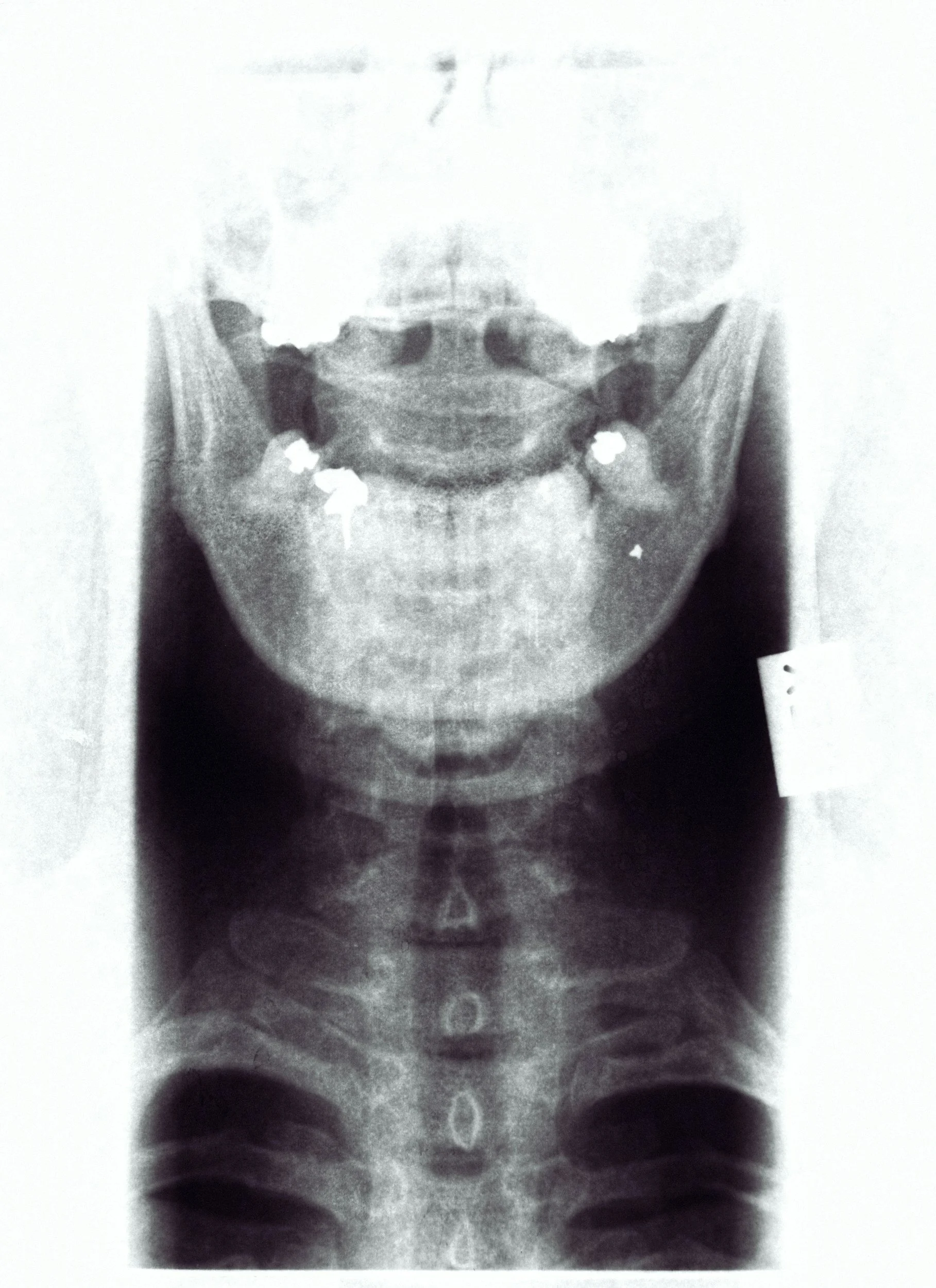
Videofluoroscopy (VFSS), also known as the modified barium swallow study (MBSS), remains one of the “gold standard” assessments for swallowing, alongside the flexible endoscopic evaluation of swallowing (FEES). As gold standards are meant to do, the VFSS makes most other attempts to assess the swallow seem pale in comparison, despite its black-and-white image. But that’s only part of the story. Having access to the VFSS doesn’t eliminate the need to improve. And there’s always room for improvement in patient care.
Picture an SLP. She’s been in the fluoroscopy suite for 30 years, and she can spot overt aspiration from a mile away. Her VFSS routine is efficient, familiar, and rooted in decades of visual perception. Yet, like so many of us, she’s resistant to change. The danger lies in relying solely on a practiced eye when science provides better lenses. While Sarah's experience has value, is her unstandardized approach missing the minute details that new tools can pinpoint? You wouldn’t fly on a plane that was built in the 1920s, would you?
Science breeds innovation, and innovation breeds effectiveness and safety. Research shows that relying solely on a Gestalt approach can obscure the specific physiological limitations that underlie the overall disorder. This article will show you how a lack of standardization, even in experienced hands, can lead to diagnostic gaps and how utilizing standardized scoring and advanced measurement tools can transform the VFSS from an experienced guess into a truly objective gold standard.
Standardized Tools for Clinical Interpretation
You’ve likely been told that standardization is important. It’s certainly better than a non-standardized approach, you might be thinking. But take a minute to step back and put a 'why' behind the 'what'. Why do we seek ways to standardize our process? Use this opportunity to test what you know. Before going on, see if you can find three reasons why standardization helps our practice in the context of VFSS. Done thinking? Ok, here are the big three.
VFSS…
Improves communication between clinicians
Allows comparison to baseline measures (I.e., when assessing for progress)
Ensures consistency across clinicians and across time
With that in mind, what are some ways we can standardize our VFSS exams? Let’s start with some gestalt and functional tools, those that are designed to transform the data into a clear picture of the patient’s status and function.
The Penetration-Aspiration Scale (PAS)- learn more about its purpose, as well as its strengths and weaknesses, here.
The Dynamic Imaging Grade of Swallowing Toxicity (DIGEST) uses a 5-point severity grade. This grade is determined by separately assessing safety (based on maximum Penetration-Aspiration Scale scores and event frequency/amount) and efficiency (based on maximum percent pharyngeal residue).
And then there are physiological and kinematic tools that aim to dissect the minute details to pinpoint which physiological limitations may be contributing to the overall disorder. Here we have:
The Modified Barium Swallow Impairment Profile (MBSImP): This captures 17 physiological components of swallowing, fundamentally changing how dysphagia is taught and communicated. In other words, a game changer in this domain.
Quantitative tools like ASPECT-C and Swallow Tail: Advanced, quantitative software tools for detailed kinematic analysis of videofluoroscopy. Typically used in research or specialized clinical settings, they provide objective, precise measurements (e.g., timing, displacement) of swallowing events, standardizing physiological measurements beyond visual-perceptual ratings like MBSImP or PAS.
TIMS and other dysphagia-focused software: Automates standardized measurements, increasing the efficiency and effectiveness of standardizing our exams. Saving the SLP valuable time is definitely something I support.
VFSS Is Not Perfect
Yes, like all tools, the VFSS has limitations. Think about it this way: The swallow is one of the most complex systems in our entire body. The coordination and neurological communication of over 50 muscles is akin to a high-stakes juggling act over one of the most critical anatomical pathways in the human body… the airway. If the human body were a reality show, every swallow would be that moment everyone slides to the edge of their seat to see what’s going to happen at the altar.
Having access to VFSS certainly eliminates much of the guesswork associated with swallow assessments. We are visualizing something versus the subjective and objective measurements taken at the bedside. If a clinical assessment involves examining a room by looking at the door outside, the VFSS at the very least allows us to open the door. But we’re still not quite in the other room…
Beyond the technical 2D limitations (which can be partially addressed by positioning the patient in the Anterior-Posterior (AP) view), the greatest barriers today are rooted in access and training.
The Snapshot of a Highly Variable Act
VFSS provides data from a single moment in time, which may not accurately represent a patient's true functional status. Think about the patient who comes in lethargic after a recent infection, has a VFSS while propped up with a wedge in their stretcher, and is asked to gulp down white liquid that looks more like something that should sit inside a beaker in a science lab than inside a drinking glass. All of a sudden, the test is discontinued after one trial, and they're labeled as an “aspirator” with no hope of a follow-up study anytime soon. That’s obviously not what we want.
But this is where our tools can help us. Due to the high variability in testing and measurements, we should utilize the Gestalt scoring tools discussed earlier, which examine the entire exam and provide a comprehensive overview of potential issues. Protocols like the MBSImP ensure we amplify the number of boluses to capture the whole picture. We want an accurate interpretation of what’s really happening with the patient. Anything short of that would be like a physical therapist seeing a patient who has pain while walking, but only examining them while sitting down. We don’t want to miss what we’re looking for.
Where Have All The Radiologists Gone?
Have you noticed that lately, your radiologists have been less than enthusiastic about attending your VFSS? There’s a reason for this…
Radiologists can play a vital role as partners for the VFSS. Their expertise and insights can help us fill the gaps in our understanding, improve diagnostics, and ultimately, establish a more effective plan of care for the patient. However, their decreased attendance often stems from the fact that these exams are frequently uncompensated or poorly reimbursed, leading them to be prioritized lower on a demanding clinical schedule. Being properly compensated for complex collaborative time is essential to the study being viewed as an opportunity for collaboration and problem-solving, rather than simply another item to be pushed to the bottom of their to-do list.
Extend an invitation: One solution to this problem is to advocate for training “extenders” such as physician assistants (PAs) or technologists to give them greater control and responsibility to conduct exams independently. This would free up the radiologist for other exams, improve efficiency, and still keep the radiologist available for questions and support. In many states, though, extenders are unable to perform the study independently… yet.
What can you do?
SLPs are increasingly recognized as key professionals in fluoroscopy; therefore, it's time we use this leverage to speak up and request what we need to perform a minimum viable study. What can you do?
We must actively engage with radiologists; the more information and clinical needs SLPs bring to the exam, the more collaborative and enthusiastic radiologists will be in supporting the study. Radiologists want to know they are making a difference (and they are!).
Champion the need to re-evaluate state regulations that currently mandate constant direct physician oversight, arguing that these rules limit efficiency and radiologist collaboration. This must be framed not as reducing safety, but as optimizing the workflow and leveraging the expertise of the entire clinical team to ensure the VFSS is seen as a crucial diagnostic tool rather than a low-priority scheduling burden.
Advocate for universally accepted standards to guide us in pushing for better quality exams. That extends beyond the radiologist and encompasses imaging standards, recording, and access to software such as TIMS.
Conclusion:
The videofluoroscopy remains a cornerstone of dysphagia diagnosis, but we cannot treat it as an infallible source. Its value is only as high as the rigor we bring to its application. To move beyond the limitations of a single "snapshot" in time, we must actively implement standardized tools such as the PAS, DIGEST, and MBSImP to ensure consistency across clinicians and over time.
SLPs are increasingly recognized as key professionals in fluoroscopy. We must utilize this leverage to advocate for universally accepted standards and access to imaging, ensuring our patients benefit from collaborative, fully compensated, and expertly interpreted studies. Our responsibility is to transform the VFSS from a mere diagnostic event into a comprehensive, standardized, and indispensable step in evidence-based dysphagia management.