Treating the Person, Not the Swallow: A case study on impulsivity and quality of life
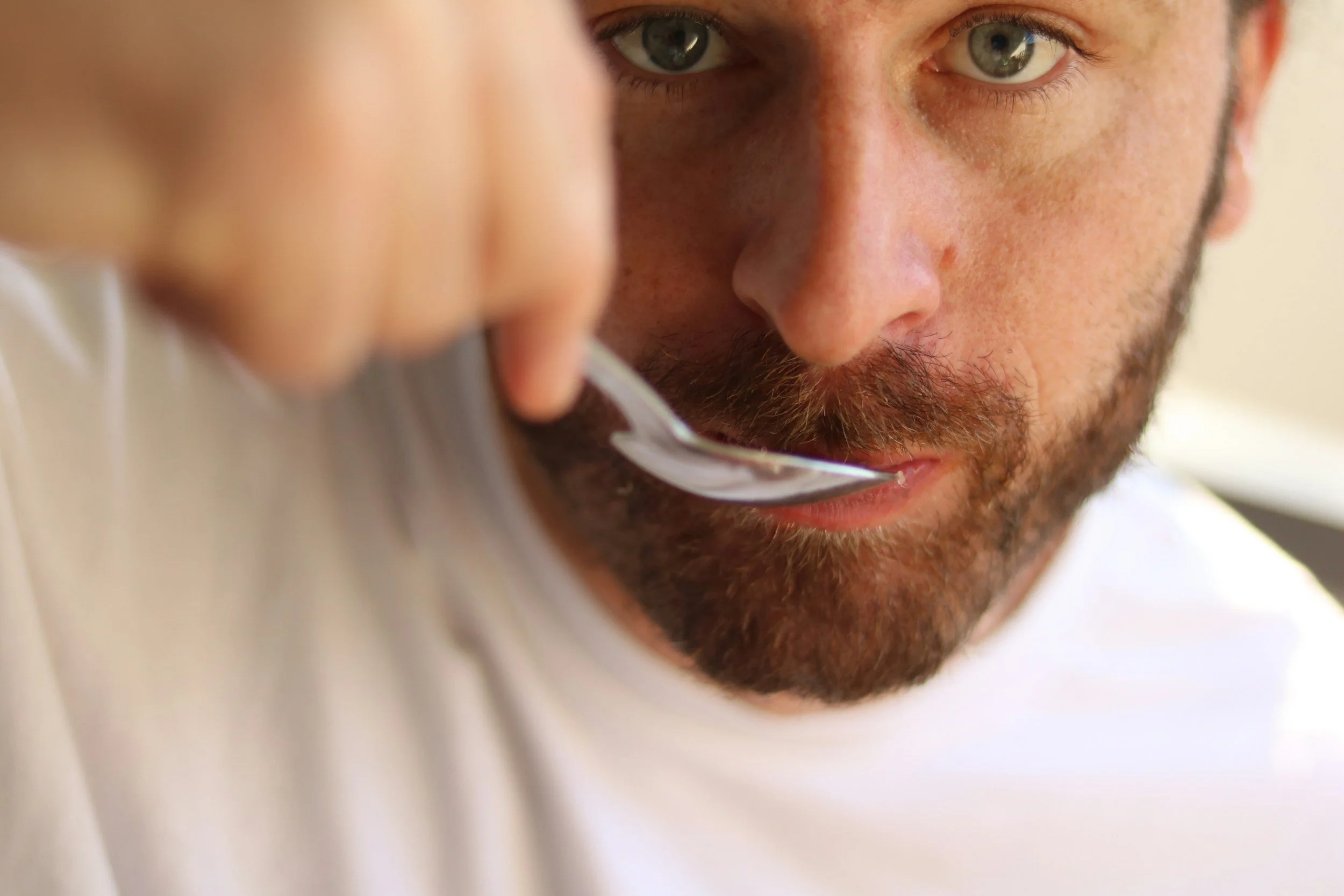
I recently helped manage the care of a patient who motivated me to write this. All identifying details have been changed to protect his identity…
68-year-old Miguel has a history of a CVA resulting in left-sided hemiparesis and moderate cognitive-communication deficits. He also has a medical history of schizoaffective disorder, chronic AFIB, and a recent pneumonia. He is bed-bound. Miguel’s most recent chest X-ray revealed bilateral atelectasis and pleural effusion.
Are the red flags going off in your head yet? If you’re like me, you might be anticipating some potential swallow-related issues with Miguel. Here’s what the staff were seeing in the nursing home…
CNAs and nurses verbalized concerns of impulsivity, rapid intake, over-stuffing the oral cavity, and poor positioning, leading to coughing, throat clearing, and even facial color changes (Turned blue on one occasion). Thankfully, he has not required the Heimlich maneuver… yet. He often became agitated when the nursing staff tried to control his impulsive intake, yelling back at them, “I can eat however I want to eat!”
Fair… But still concerning.
Everyone was concerned he was going to choke.
The medical team proactively downgraded his diet from soft to puree and ordered an SLP evaluation to take a closer look and help guide the plan of care. While Miguel reported that food often feels stuck in his throat, he also expresses deep dissatisfaction with his pureed diet, famously stating he "wants a Cuban sandwich" to anyone within earshot.
What would you do in this situation? What do you think would be the next best step?
The next best step:
To bridge the gap between bedside suspicion of dysphagia and the objective data, we need to build an informed and accurate plan of care. Miguel underwent a modified barium swallow study (MBSS). In the controlled environment of the radiology suite, Miguel appeared to do quite well.
The MBSS Results:
Cognitively: Miguel was alert, calm, cooperative, and followed all directions without issue. No impulsivity or agitation was observed.
Physiology: Imaging showed mild to moderate oropharyngeal dysphagia characterized by decreased bolus control, reduced base of tongue retraction, and suboptimal hyolaryngeal elevation/excursion.
Efficiency: Moderate pharyngeal residue was observed, but cleared with a left head turn and a double swallow.
Safety: A moderate amount of laryngeal penetration was noted with thin and mildly thick liquid trials, but was eliminated when Miguel used a left head turn.
Result: The evaluating SLP recommended an upgrade to regular solids and to continue thin liquids, provided Miguel used the recommended compensatory strategies and 1:1 supervision for carryover and safety.
The Real World
The SLP walked into the room talk to Miguel about the good news regarding the results of his MBSS. As soon as she walked in, she noticed Miguel lowering his bed into a reclined position, taking five to six rapid-fire bites of a sandwich, and demonstrating zero carryover of the left head turn despite reminders, education, and cueing. The overt coughing and mealtime distress return, and the treating SLP is at a loss for what to do.
Do we change the diet back to puree? Or allow him to continue to eat what he wants, crossing our fingers that he doesn’t choke?
Radiology vs Reality
Miguel’s case reminds us that the instrumental swallowing evaluation is not the be-all, end-all. Instrumental studies only give us one piece of a very big, complex, and ever-evolving puzzle. It’s a big piece of the puzzle to be certain, but only one piece nonetheless. Some refer to instrumental swallow studies as nothing more than a “snapshot in time.” While I disagree with the notion of a snapshot (An instrumental provides valuable, objective anatomical and physiological data that cannot be accessed clinically), it is true that they do not give us the whole picture, especially when working with an impulsive patient with a highly variable status.
The Hawthorne Effect
The Hawthorne Effect states that when we observe a patient’s swallowing behavior, the act of observation alters the behavior. It’s like the dentist watching you brush your teeth. You’d be on your best behavior, scrubbing every morsel from every square millimeter of every molar.
During the MBSS, Miguel was on his best behavior, too, and had the cognitive resources to focus for ten minutes. During a full meal in a distracting environment where he’s not being watched as carefully or at all, that behavior vanishes.
So what can we do to help hit our goal if that goal is a moving target?
From a clinical standpoint, preventing a choking event is the most important thing, given the high risks with Miguel's impulsivity and over-stuffing behaviors. Pureed textures significantly lower the risk of a fatal choking event. Safety first, right?
But what if the patient declines? What do we do then? Two things…
Discuss and Document:
Discuss: Engage the team. The burden of this decision should not fall solely on the SLP. Discuss the risks of an upgrade (choking/pneumonia) versus the benefits (patient satisfaction/quality of life) with the doctor, the family, and Miguel himself. And remember, no decision carries zero risk. With that in mind, don’t forget to also discuss the risks of a downgrade to puree (malnutrition/compromised quality of life) versus the benefits (safety/less supervision and mealtime strategies).
Some questions to consider during this conversation:
After adequate discussion and education, what is Miguel telling us is most important here? Safety or quality of life?
How can we balance these things?
What risks is the patient willing to accept, and which are not?
What small adjustments can we make to get us closer to the patient’s goals without significantly compromising safety?
Is the rest of the team on board with this plan? Why or why not?
And don’t play a game of telephone when the stakes are high like this– Get everyone in the same room to sort out the details and create a universally agreed upon plan of care.
Document the "Why" behind the “What”: Detailed documentation is really important here. Your notes should reflect that Miguel understands the risks but cannot physically, cognitively, or willingly carry out the safety strategies required for a diet upgrade.
Regarding this balance of safety and quality of life. How can we improve mealtime safety if Miguel decides to continue a regular diet despite the risks?
3 small things that can make a BIG impact:
Supervision: Miguel needs a partner to help him slow down. Remind him: "One bite at a time, swallow, then swallow again. Take a few breaths in between. Don’t forget to turn your head to the left each time.”
Mouth Care is Medicine: Perform oral care at least 3 times a day. If he is aspirating, keeping his mouth clean is the best way we know of to help prevent pneumonia. Think of it like a filter for the lungs.
Watch for "Red Flags": If we see his face turn red or he has a coughing fit, we have to stop the meal immediately, notify the nurse, and reconsult the SLP.
Conclusion:
Miguel’s case is a reminder that we don't treat the results of the MBSS… we treat a person. The MBSS is like a detailed map of a city. It’s certainly helpful when navigating, but it doesn’t tell us about construction sites we need to avoid or other cars on the road that may cut us off. If a patient cannot safely manage a diet in their normal daily environment, the performance in the radiology suite won’t do us much good.
By educating the patient, family, and medical team on the difference between "physiological safety" (what he can do) and "functional safety" (what he actually does), we provide them with the clarity they need to support a safe plan of care. Similarly, discussing what he should do versus what he will do helps us determine whether our plan of care is appropriate or if we need to adjust. The goal? To facilitate the highest quality of life while maintaining a clear-eyed view of the risks. And I hope we did that for Miguel.